Bencros brings carbon insetting to marine fenders
Making circularity count



Joost Komijn
CEO
Marine fender manufacturer Bencros is recycling waste rubber to create a verified insetting claim that can be allocated directly to customers’ Scope 3 emissions, linking the circularity of its products to measurable carbon savings.
Bencros Marine Fenders is putting a carbon value on the circular use of rubber, allowing customers buying its recycled-content fenders to claim independently verified emissions reductions against their own supply-chain footprint.
The first emissions reduction certificates will go on sale on 2nd September 2026 covering 13,112 tonnes of CO₂e savings generated during 2024 and 2025. The emissions reductions have been independently verified by Bureau Veritas under the Proba Standard, a carbon crediting standard used to measure, verify, and certify the reduction or removal of greenhouse gas emissions. The resulting certificates are issued on Proba’s blockchain-based registry, with each certificate registered to the customer and uniquely identifiable to prevent double counting.
Bencros says the saving is around 2.6 tonnes of CO₂e for every tonne of fender purchased, compared with a conventional product made from virgin rubber.
Crucially, the company has separated that figure into two elements: around 2.42 tonnes of CO₂e per tonne of product can be booked by the purchaser against its Scope 3, Category 1 emissions for purchased goods and services. A further 0.16 tonnes is associated with avoided incineration of the waste rubber and that is reported separately as a climate contribution. The distinction is important in a market increasingly concerned about the credibility of environmental claims.
Bencros is not selling the emissions reduction certificates as conventional carbon offsets. The emissions reduction occurs in the production of the physical product being purchased and it creates a product-level insetting credit, with the associated claim transferred to the buyer.
“This is not an offset,” said Bencros Founder and Chief Executive Joost Komijn. “This saving happens inside the product you actually bought, in your own supply chain and it comes straight off your own reported footprint. You buy the fender you were going to buy anyway – and with it, the CO₂ saving.”
From tyres to fenders and back again
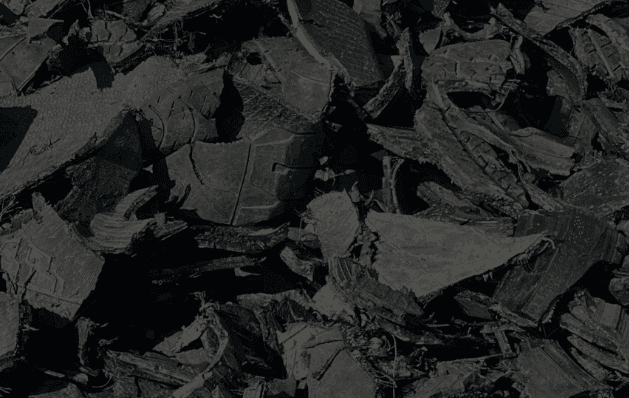
The carbon claim is built around a circular rubber supply chain. Bencros uses rejected rubber from tyre factories, ground end-of-life tyres and industrial rubber production. The company says it used 5,070 tonnes of rubber waste in 2024 and 2025, turning material that might otherwise have been incinerated or disposed of into feedstock for new marine fenders.
The circularity extends to their own products, as used fenders can be returned, shredded and blended back into the production chain. The result is a supply chain that links tyre waste, industrial rubber waste, marine fender production and end-of-life fenders.
The certification adds a further layer by quantifying the emissions benefit created by keeping that material in circulation.
Making circularity count
Certificates are priced at €80 per tonne of CO₂e saved, with the proceeds used to fund waste collection, processing, homogenisation, quality control and verification. The first certificates have already been reserved by a Norwegian customer who purchased fenders together with the associated CO₂ savings.
For maritime companies under increasing pressure to reduce Scope 3 emissions, the proposition is potentially more significant than the relatively small size of the fender market suggests.
Purchased goods can be difficult to decarbonise because buyers often have little control over the materials and manufacturing processes used by suppliers. A product whose recycled content and associated emissions saving can be independently verified provides a direct route to addressing those upstream emissions.
By combining recovered tyre and industrial rubber, take-back of used marine products, independent verification and a registry-based certificate, Bencros is turning a waste stream into a new product and revenue stream and a measurable emissions saving for the company that buys it.
Article by Martime Carbon Intelligence